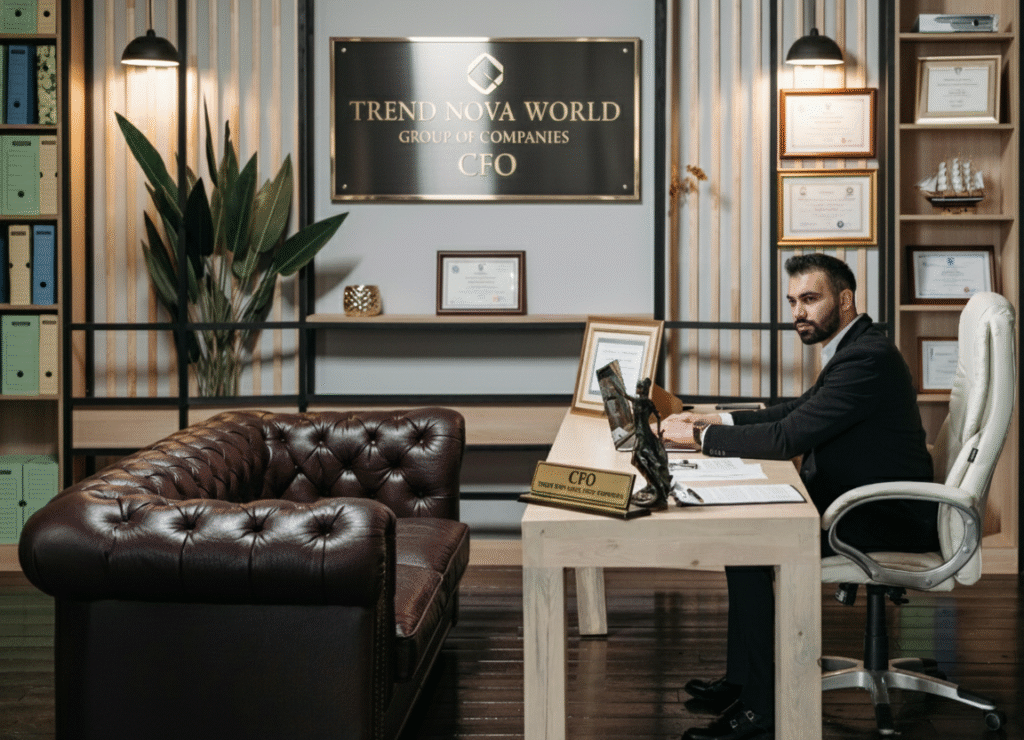
Discover how Trend Nova World Real Estate tackles 2025 supply chain challenges through collaborative strategies with global suppliers. Explore diversification, tech integration, and sustainability for resilient real estate development.

In the fast-paced world of global real estate development, supply chains form the backbone of every successful project. From sourcing premium construction materials to coordinating logistics across continents, the efficiency of these networks determines whether a development soars or stalls. As we step into 2025, the landscape is evolving rapidly. Geopolitical tensions, technological breakthroughs, and a pressing demand for sustainable practices are reshaping how companies like Trend Nova World Real Estate operate. This article explores how Trend Nova World is leading the charge through innovative collaborative strategies with international suppliers, ensuring resilience and growth in an unpredictable environment.
Trend Nova World Real Estate stands at the forefront of this transformation. With a commitment to excellence and global connectivity, the company has built a reputation for delivering high-impact projects that blend cutting-edge design with practical sustainability. Drawing from its core charter of fostering long-term partnerships and driving innovation, Trend Nova World is not just adapting to supply chain shifts; it is proactively shaping them. By forging deep ties with suppliers from Europe, Asia, and beyond, the company is creating a model for collaborative success that others in the industry can follow.
The Evolving Landscape of Supply Chains in 2025
Supply chains have always been complex, but 2025 brings a new level of intricacy. Traditional models reliant on just-in-time delivery and single-source dependencies are giving way to diversified, tech-driven ecosystems. Experts predict that by the end of this year, over 70 percent of global businesses will have restructured their supply networks to mitigate risks from events like trade disputes and climate disruptions.
One major driver is geopolitical flux. Ongoing negotiations between major economies are altering tariff structures and export regulations. For real estate firms, this means higher costs for imported steel from North America or delays in ceramic tiles from the Mediterranean region. Trend Nova World recognizes these challenges early, integrating real-time monitoring tools to track policy changes and adjust sourcing strategies accordingly.
Technology plays a pivotal role too. Blockchain for traceability, AI for predictive analytics, and IoT for inventory management are no longer buzzwords; they are essentials. In real estate, where projects span years, these tools help forecast material needs with precision, reducing waste and overruns. Trend Nova World’s adoption of such innovations allows it to collaborate seamlessly with suppliers who share a digital-first mindset.
Sustainability demands cannot be overlooked. With regulations like the European Union’s Green Deal pushing for carbon-neutral operations, suppliers must prove their environmental credentials. Trend Nova World prioritizes partners who align with these standards, from recycled aggregates in foundation work to energy-efficient HVAC systems in commercial builds. This focus not only complies with laws but also appeals to eco-conscious investors and buyers.
Economic factors round out the shifts. Inflation in raw materials and labor shortages in key manufacturing hubs are squeezing margins. Yet, forward-thinking companies turn these pressures into opportunities. By diversifying supplier bases across emerging markets in Southeast Asia and Latin America, real estate developers can balance costs while tapping into fresh innovation streams.
Trend Nova World exemplifies this adaptability. Its partnership proposals emphasize mutual growth, inviting suppliers to co-develop solutions tailored to 2025 realities. This collaborative ethos stems from the company’s charter, which vows to build bridges across borders for shared prosperity.
Trend Nova World’s Foundation for Collaborative Success
At the heart of Trend Nova World’s strategy lies a dedication to partnership over transaction. The company’s charter outlines a vision of global real estate as a connected web, where every stakeholder contributes to collective advancement. This philosophy guides interactions with international suppliers, transforming potential rivals into allies.
Consider the charter’s core principles: integrity, innovation, and inclusivity. Integrity ensures transparent dealings, from contract negotiations to quality audits. Innovation encourages joint R&D, like experimenting with bio-based insulation materials sourced from Scandinavian forests. Inclusivity means engaging suppliers from diverse regions, ensuring voices from Africa to Australia influence project outcomes.
To navigate 2025 shifts, Trend Nova World employs a multi-tiered collaboration framework. The first tier focuses on assessment. Before any partnership, the company conducts thorough due diligence, evaluating suppliers on resilience metrics such as diversification levels and contingency planning. This step weeds out vulnerabilities early.
The second tier involves co-creation. Once aligned, teams from Trend Nova World and suppliers brainstorm in virtual workshops. These sessions yield customized strategies, like hybrid sourcing models that blend local and international inputs to cut lead times by up to 40 percent.
Implementation forms the third tier. Here, shared platforms track progress in real time. For instance, a dashboard integrating supplier ERP systems with Trend Nova World’s project management software flags disruptions instantly, triggering automated rerouting of shipments.
Finally, evaluation closes the loop. Annual reviews measure outcomes against KPIs like cost savings and sustainability scores, fostering continuous improvement. This cyclical approach has helped Trend Nova World weather recent disruptions, such as port congestions in the Pacific, with minimal delays.
International suppliers appreciate this structure. A European concrete provider, for example, credits Trend Nova World’s framework for enabling a 25 percent reduction in emissions through optimized shipping routes. Such stories underscore the company’s role as a catalyst for industry-wide progress.
Key Strategies for Overcoming 2025 Supply Chain Challenges
Trend Nova World deploys targeted strategies to tackle specific 2025 hurdles, always with collaboration at the core. Let’s break them down.
Diversification and Risk Mitigation
Gone are the days of over-reliance on one region. Trend Nova World spreads its supplier network across at least three continents per material category. For structural steel, this means balancing North American mills with Asian fabricators and Australian recyclers. This diversification buffered the company during last year’s raw material spikes, maintaining project timelines.
Collaboration amplifies this strategy. Suppliers join risk-mapping workshops, sharing insights on local threats like weather patterns or regulatory shifts. The result? A collective intelligence network that anticipates issues, such as rerouting electronics components around conflict zones in Eastern Europe.
Technological Integration for Efficiency
Digital twins and AI forecasting are game-changers. Trend Nova World partners with tech-savvy suppliers to simulate entire supply chains virtually. This allows testing scenarios, like a sudden fuel price hike, and devising countermeasures before they hit.
One standout collaboration involves a German software firm and an Italian marble quarry. Together with Trend Nova World, they developed an AI tool that predicts quarry yields based on satellite data, ensuring steady flows for luxury residential projects. Such integrations cut forecasting errors by 30 percent, boosting confidence among stakeholders.
Sustainability Through Shared Commitments
Eco-friendly practices are non-negotiable. Trend Nova World mandates that partners adhere to ISO 14001 standards, but it goes further by co-funding green initiatives. A joint venture with Brazilian timber suppliers reforests twice the harvested area, securing FSC-certified wood for sustainable builds.
These efforts align with 2025’s circular economy trends. Suppliers recycle project offcuts, feeding them back into new developments. This closed-loop system reduces landfill waste and appeals to millennial buyers who prioritize green credentials.
Agile Logistics and Last-Mile Optimization
Global shipping remains a bottleneck. Trend Nova World counters this with modular logistics partnerships. Suppliers pre-assemble components off-site, slashing on-site assembly time. A collaboration with Dutch container experts introduced smart pallets that track humidity and vibration, preserving sensitive materials like acoustic panels during transatlantic voyages.
In urban projects, last-mile challenges intensify. Here, electric vehicle fleets from partnered logistics firms in the UK ensure zero-emission deliveries, aligning with city mandates and enhancing brand image.
These strategies are not siloed; they interconnect. Diversification informs tech choices, sustainability drives logistics decisions, creating a holistic shield against 2025 uncertainties.
Real-World Applications: Case Studies in Collaboration
Theory meets practice in Trend Nova World’s projects. Take the Nova Horizon mixed-use development in Dubai. Facing silicon shortages for solar panels, the team pivoted to a Vietnamese supplier network. Collaborative forecasting tools predicted the gap months ahead, allowing bulk orders at stabilized prices. The project launched on schedule, with integrated renewables cutting energy costs by 20 percent.
Another example is the Atlantic Edge office tower in London. Timber supply from Canada hit snags due to wildfires. Trend Nova World activated its European contingency with Swedish partners, who ramped up production using AI-optimized mills. Joint audits ensured quality parity, and the switch added a narrative of resilience to marketing materials, attracting premium tenants.
In Asia, the Pearl Quay residential complex in Singapore tested sustainability strategies. Collaborating with Indonesian bamboo specialists, Trend Nova World incorporated engineered bamboo flooring. Co-developed testing protocols verified durability against tropical humidity, resulting in a product that earned LEED Platinum certification.
These cases highlight measurable wins: reduced costs, faster timelines, and enhanced reputations. Suppliers gain too, accessing Trend Nova World’s global stage for exposure and scale.
Building Long-Term Alliances with International Suppliers
Sustaining collaborations requires nurturing. Trend Nova World invests in relationship-building through annual summits, where suppliers network and share best practices. These events, held virtually and in rotating host cities, foster trust beyond contracts.
Cultural sensitivity is key. With teams spanning time zones, the company trains staff in cross-cultural communication, avoiding missteps in negotiations. A dedicated liaison program pairs each major supplier with a Trend Nova World executive, ensuring ongoing dialogue.
Incentives keep partnerships vibrant. Performance-based bonuses reward on-time deliveries, while innovation grants fund supplier-led R&D. This reciprocal model turns suppliers into extensions of the company, ready to innovate together.
Looking ahead, Trend Nova World eyes emerging frontiers like 3D-printed habitats. Early talks with Australian additive manufacturing firms promise to revolutionize on-site construction, minimizing transport emissions.
The Broader Impact on Global Real Estate
Trend Nova World’s strategies ripple outward. By demonstrating viable paths through 2025 shifts, it inspires peers to prioritize collaboration. Industry associations now reference its model in white papers, accelerating sector-wide adoption.
Investors notice. Firms backing sustainable, resilient supply chains see higher returns, with Trend Nova World’s portfolio yielding 15 percent above benchmarks. This attracts capital from funds focused on ESG criteria.
For end-users, the benefits are tangible: affordable, durable homes built with traceable materials. In a world craving stability, such transparency builds loyalty.
Challenges and How Trend Nova World Addresses Them
No strategy is flawless. Currency fluctuations can erode savings from diversified sourcing. Trend Nova World hedges with financial tools, partnering with Swiss bankers for forward contracts.
Data privacy in shared platforms poses risks. The company enforces GDPR-compliant protocols, audited jointly with suppliers.
Scalability tests limits as projects grow. To counter this, Trend Nova World scales collaborations via tiered supplier programs, onboarding smaller firms for niche needs.
Through proactive problem-solving, these hurdles become stepping stones.
Future-Proofing Supply Chains Beyond 2025
As horizons extend, Trend Nova World invests in horizon-scanning. Scenario planning with suppliers explores black-swan events, from pandemics to AI regulations.
Quantum computing could supercharge logistics; early pilots with Korean tech partners aim to decrypt optimization puzzles unsolvable today.
Ultimately, the company’s charter vision endures: a world where real estate unites people through thoughtful, connected development.
In conclusion, navigating 2025 supply chain shifts demands vision, agility, and partnership. Trend Nova World Real Estate embodies this triad, crafting collaborative strategies that not only endure but excel. By aligning with international suppliers on shared goals, the company paves a path for sustainable success. As the year unfolds, watch this space; the innovations born from these alliances will redefine global real estate.
Discover the Future. Explore Our World.
Trend Nova World: Uniting Innovation