A joint FAO-focused initiative advancing climate resilient agriculture and on-farm water management through adaptive research and farmer-led demonstration plots.
Services for Setting up Climate Resilient Agriculture (CRA) and On-Farm Water Management (OFWM) Demonstration Plots
Proposed Joint Venture Project | Farmers’ Integrated Development Association (FIDA) & Trend Nova World (TNW)
Project Overview
This proposed initiative focuses on establishing Climate Resilient Agriculture (CRA) and On-Farm Water Management (OFWM) demonstration plots while supporting adaptive agricultural research across selected districts of Punjab and Sindh. The project has been submitted as a Joint Venture between Farmers’ Integrated Development Association (FIDA) as Lead Partner and Trend Nova World (TNW) as Technical Partner, in response to an FAO-supported program under the broader Transforming Indus Basin framework.
The project is designed as a 14-month, multi-season intervention, aligned with Pakistan’s Rabi and Kharif cropping calendars, to generate scientifically validated, farmer-tested evidence on climate-smart technologies. By combining side-by-side demonstration plots with digital data systems and structured capacity building, the initiative aims to support scalable, evidence-based decision-making for climate adaptation in agriculture.
Strategic Context and Rationale
Agriculture in Punjab and Sindh faces mounting challenges from climate variability, water scarcity, declining soil health, and inefficient irrigation practices. Smallholder farmers who form the backbone of the agricultural economy are particularly vulnerable to these stresses, often lacking access to tested climate-resilient practices and reliable extension services.
This project responds to these challenges by:
- Demonstrating practical, field-tested CRA and OFWM technologies
- Generating rigorous adaptive research data across diverse agro-ecological zones
- Strengthening farmer-to-farmer learning through Field Days and extension outreach
- Supporting institutional learning for scaling climate-smart practices
The initiative aligns with national climate adaptation priorities and the UN Sustainable Development Goals, particularly SDG 2 (Zero Hunger), SDG 6 (Water Management), SDG 13 (Climate Action), and SDG 17 (Partnerships).
Joint Venture Value Proposition
The FIDA–TNW Joint Venture is structured to combine deep grassroots reach with advanced technical and analytical capability, ensuring both effective implementation and high-quality evidence generation.
Farmers’ Integrated Development Association (FIDA) – Lead Partner
FIDA serves as the operational backbone of the project, leading:
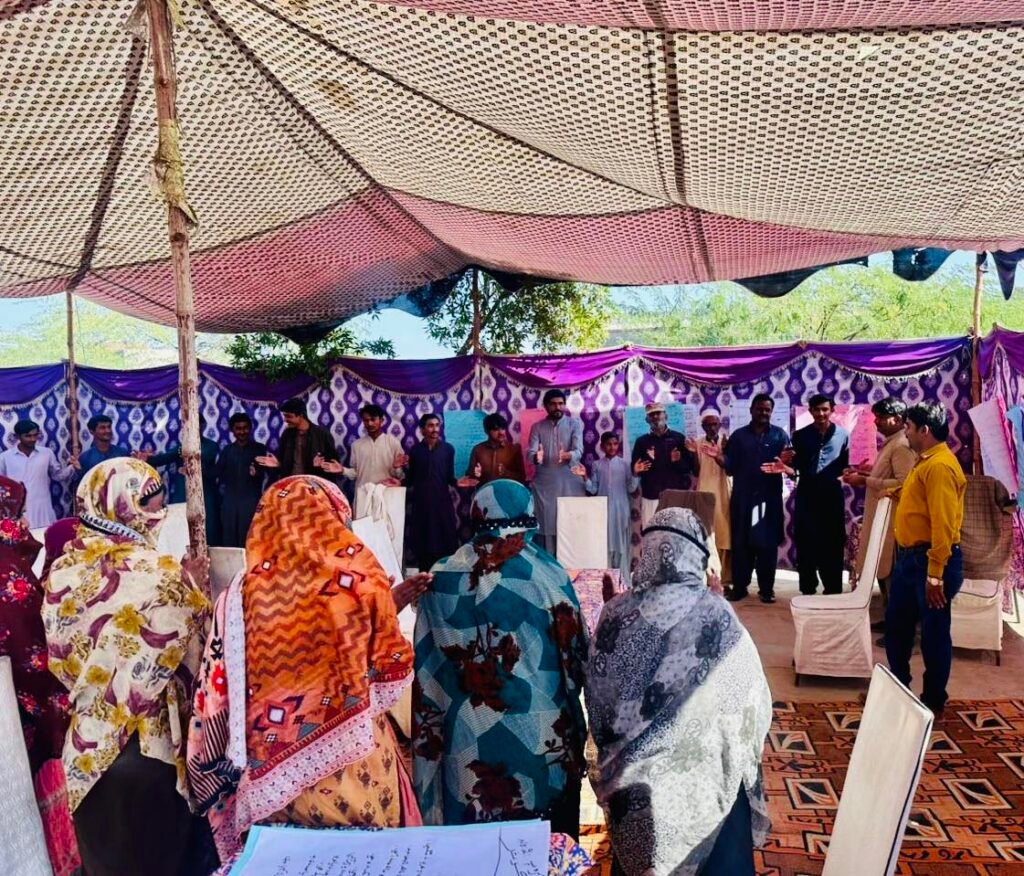
- Farmer mobilization through Farmer Field Schools (FFS) and Women Open Schools (WOS)
- Establishment and supervision of demonstration plots
- Community-level training, facilitation, and field days
- Coordination with provincial departments and local stakeholders
With a long-standing presence across Punjab and Sindh, FIDA brings strong institutional familiarity with FAO systems, extension methodologies, and inclusive community engagement.
Trend Nova World (TNW) – Technical Partner
TNW functions as the project’s technical and knowledge partner, responsible for:
- Adaptive research design and methodological rigor
- Digital data collection systems (ODK/Kobo)
- Monitoring, Evaluation, Accountability, and Learning (MEAL)
- Statistical analysis, reporting, and knowledge products
TNW’s role ensures that field activities translate into actionable, policy-relevant evidence, supported by digital dashboards and structured analysis.
Project Objectives
The proposed project aims to:
- Establish side-by-side CRA and farmer-practice demonstration plots
- Promote efficient water use through OFWM technologies
- Generate adaptive research data across two cropping seasons
- Strengthen farmer and extension worker capacities in climate-smart practices
- Facilitate large-scale knowledge dissemination through field days and training
- Support evidence-based scaling of CRA interventions
Technical Approach and Methodology
The project adopts a phased, evidence-driven implementation model, transforming demonstration plots into “learning laboratories.”
Phase 1: Inception and Site Selection
Using participatory mobilization and GIS-supported validation, the JV will identify and finalize demonstration sites across eight target districts. Selection criteria include soil homogeneity, water availability, accessibility, and farmer commitment. Formal consent and data-sharing protocols ensure transparency and ethical compliance.
Phase 2: Establishment of Demonstration Plots
Each site will follow a paired plot design, allowing direct comparison between CRA practices and traditional farmer methods. Plots will be established for both Rabi and Kharif seasons, with synchronized sowing and standardized inputs to isolate the impact of climate-resilient practices.
CRA interventions include:
- Precision land leveling and planting techniques
- Soil moisture management using appropriate tools
- Improved input efficiency and crop management practices
Phase 3: Digital Data Collection and Adaptive Research
TNW will deploy a digital monitoring system, capturing real-time agronomic, water-use, and economic data. This replaces paper-based reporting with geotagged, cloud-based data streams, enabling:
- Accurate yield and water-efficiency analysis
- Correlation with localized climatic conditions
- Evidence-based assessment of CRA performance
Phase 4: Capacity Building and Knowledge Dissemination
The project emphasizes scale through learning:
- Field Days will enable thousands of farmers to observe and compare results directly
- Training of Trainers (ToT) will strengthen extension worker capacity
- Knowledge products will translate technical findings into farmer- and policy-friendly formats
Cross-Cutting Themes
The initiative integrates key cross-cutting priorities throughout implementation:
- Climate resilience and adaptation
- Gender inclusion, particularly through Women Open Schools
- Digital innovation in agricultural research
- Environmental and social safeguards
- Farmer-centered learning and sustainability
Expected Outcomes
The project is expected to deliver:
- Validated evidence on CRA and OFWM performance
- Improved water-use efficiency and crop productivity
- Enhanced farmer knowledge and adaptive capacity
- Strengthened extension systems and institutional learning
- Scalable models for climate-resilient agriculture
Project Status
This initiative has been formally submitted as a Joint Venture proposal and is currently positioned within Trend Nova World’s Project Pipeline as a flagship climate-smart agriculture and adaptive research intervention implemented in partnership with FIDA.