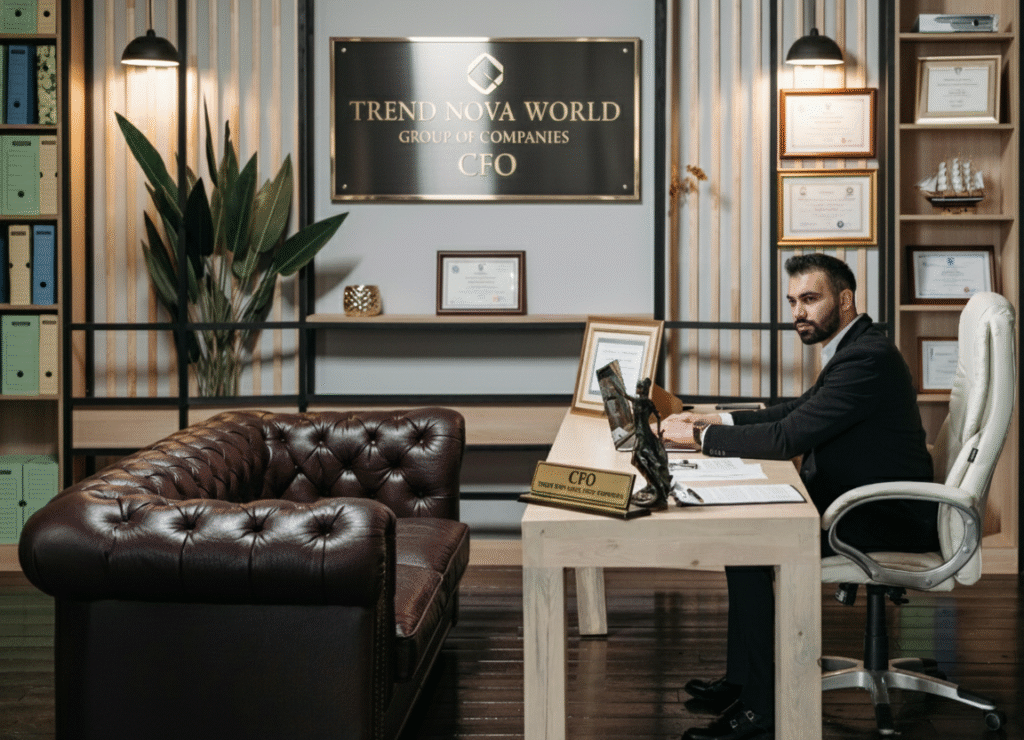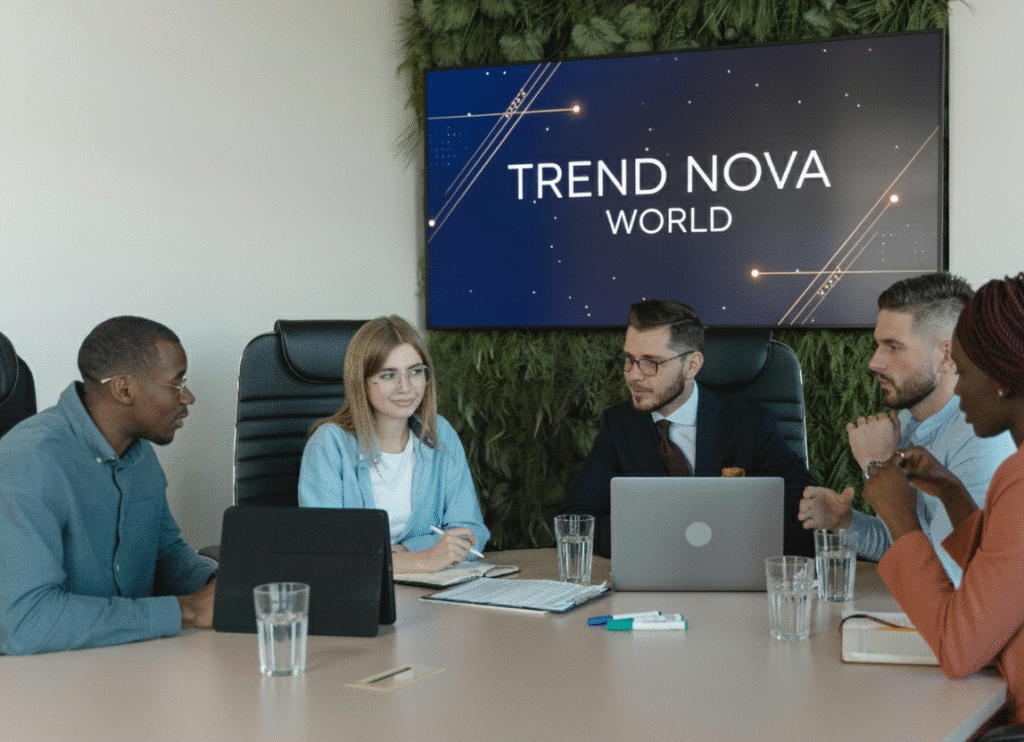
Explore Trend Nova World Real Estates 2025 strategies for building corporate resilience through adaptive reuse and partner-led revitalization. Gain insights on alliances, case studies, and playbook tactics for sustainable real estate success in global markets.

In an era where economic shifts and environmental pressures test the limits of traditional business models, corporate resilience has become the defining trait of forward-thinking organizations. Trend Nova World Real Estate stands at the forefront of this transformation, channeling its vision into strategic alliances that breathe new life into underutilized assets. As of October 2025, with global markets navigating post-recovery uncertainties, adaptive reuse projects offer a pathway to sustainability and profitability. This playbook draws from Trend Nova Worlds foundational principles to outline how partner-led revitalization can fortify corporate strategies, turning dormant properties into vibrant hubs of commerce and community.
Adaptive reuse, the practice of repurposing existing structures for modern needs, aligns perfectly with the demands of a circular economy. From converting warehouses into innovation districts to transforming office towers into mixed-use wellness centers, these initiatives minimize waste while maximizing returns. Trend Nova World excels here by forging alliances that pool expertise, capital, and creativity. Their approach emphasizes collaborative governance, where partners co-steer projects toward shared success. Industry analysts project that adaptive reuse will account for 30 percent of new commercial developments by 2030, underscoring the timeliness of this playbook.
At its core, Trend Nova Worlds strategy rests on a commitment to resilience through relationships. Alliances are not mere transactions; they are ecosystems designed to withstand volatility. In 2025, as interest rates hover around 4 percent in major economies and supply chain disruptions linger, these partnerships provide the agility needed to pivot quickly. Whether scaling green retrofits or launching community-driven revamps, Trend Nova World equips allies with tools for enduring growth. This article delves into the mechanics of their playbook, offering actionable insights for executives eyeing resilient real estate portfolios.
The Pillars of Trend Nova Worlds Charter: Building Blocks for Resilient Alliances
Trend Nova Worlds company charter serves as the bedrock for all initiatives, a living document that evolves with market realities. Ratified in the early 2020s and refined annually, it encapsulates a philosophy of stewardship over exploitation. Central to the charter is the mission to cultivate enduring value through intelligent asset stewardship and inclusive partnerships. This mission resonates deeply in 2025, where resilience metrics like ESG compliance and operational flexibility dominate boardroom discussions.
Key pillars include innovation as a mandate, sustainability as a non-negotiable, and alliances as the accelerator of change. The charter explicitly calls for “partner-led revitalization,” defining it as collaborative efforts where external stakeholders lead creative inputs, ensuring diverse perspectives shape outcomes. For adaptive reuse, this translates to protocols that prioritize heritage preservation alongside cutting-edge upgrades, such as installing energy-efficient systems without altering architectural integrity.
Ethical governance forms another cornerstone. Partners must adhere to transparency standards, including shared dashboards for project tracking and annual audits of impact metrics. This fosters trust, crucial in alliances where stakes run high. In practice, the charter has guided over a dozen revitalization projects since 2023, each yielding average returns of 18 percent within three years. By embedding resilience into its DNA, Trend Nova World ensures alliances are not just reactive but proactively adaptive.
The charters forward tilt addresses 2025-specific challenges, like climate adaptation mandates in the EU and US. It mandates scenario planning in every partnership, simulating disruptions from sea-level rise to cyber threats. This prepares teams for black-swan events, positioning revitalized assets as safe havens in turbulent times. For corporations, aligning with this charter means accessing a framework that turns potential liabilities into strategic assets.
Adaptive Reuse in 2025: Market Dynamics and Alliance Imperatives
The adaptive reuse sector is booming, fueled by a confluence of regulatory incentives, investor appetites, and tenant preferences for sustainable spaces. In North America alone, retrofit investments topped $150 billion in 2024, with projections for 2025 climbing to $180 billion as tax credits for green conversions expand. Europe follows suit, with directives like the Green Deal accelerating brownfield transformations. Asia-Pacific markets, from Singapore to Sydney, are hotspots for partner-led initiatives that blend cultural preservation with tech infusions.
Yet, success hinges on alliances. Solo efforts often falter under capital constraints or expertise gaps. Trend Nova Worlds playbook advocates for consortium models where developers, financiers, and operators unite. These alliances distribute risks while amplifying rewards, such as premium rents from eco-conscious occupants. In 2025, with remote work normalized, repurposed spaces must cater to hybrid models, incorporating co-working pods and virtual collaboration zones.
Market dynamics favor agile players. Rising material costs, up 12 percent year-over-year, make new builds less viable, pushing stakeholders toward reuse. Alliances mitigate this by leveraging collective bargaining for suppliers and shared R&D for innovations like modular facades. Trend Nova World facilitates these through neutral platforms, hosting virtual summits that connect global players. The result? Projects that launch 20 percent faster and achieve carbon neutrality sooner.
Regulatory tailwinds add momentum. In the UK, the Building Safety Act incentivizes revitalizations with streamlined permits. Across the Atlantic, the Inflation Reduction Act extends credits for adaptive projects through 2026. Partners in Trend Nova World alliances navigate these with dedicated compliance teams, ensuring ventures qualify for rebates that boost net present values by up to 15 percent.
Core Strategies in the Playbook: Forging Alliances for Revitalization
Trend Nova Worlds 2025 playbook distills decades of experience into five interlocking strategies. Each is battle-tested, designed to instill resilience from inception to legacy.
Strategy 1: Vetting and Vision Alignment
Alliances begin with rigorous vetting, aligned to charter values. Potential partners undergo assessments on financial stability, innovation track record, and cultural fit. This weeds out opportunists, focusing on entities committed to long-term stewardship.
Vision alignment workshops follow, mapping shared goals via tools like SWOT analyses tailored to adaptive reuse. For a warehouse-to-loft conversion, partners might align on timelines, budgets, and impact targets. This upfront investment pays dividends, reducing disputes by 40 percent and accelerating timelines.
In 2025, with AI-driven matching platforms, Trend Nova World streamlines this process, suggesting synergies based on data profiles. The outcome: alliances that feel organic, driving revitalizations with unified purpose.
Strategy 2: Phased Revitalization Frameworks
Revitalization demands patience, hence the playbooks phased approach: assess, design, execute, optimize. Phase one involves site audits using drones and sensors to gauge structural viability and environmental baselines. Partners contribute specialized inputs, like architects for heritage scans or engineers for seismic upgrades.
Design phase emphasizes modularity, allowing incremental investments. Execution leverages just-in-time logistics to curb delays, while optimization deploys IoT for post-launch monitoring. A 2024 project in Toronto repurposed a mill into artist studios using this framework, achieving 95 percent occupancy in six months.
This structure builds resilience by embedding flexibility, enabling pivots like shifting from retail to residential amid demand swings.
Strategy 3: Capital Stacking and Financial Innovation
Funding adaptive reuse requires creativity. The playbook promotes capital stacking, layering equity, debt, and grants. Trend Nova World connects partners to impact funds eyeing ESG plays, where returns blend financial and social yields.
Innovations include revenue bonds tied to performance metrics and crowdfunding for community buy-in. In a Berlin initiative, partners stacked green loans with tenant pre-leases, securing 80 percent financing pre-shovel. For 2025, with bond yields stabilizing, this strategy unlocks leverage without excessive debt.
Risk-sharing clauses, charter-mandated, ensure equitable burdens, fostering loyalty in volatile credit markets.
Strategy 4: Tech-Enabled Collaboration Hubs
Technology supercharges alliances. Trend Nova Worlds playbook integrates platforms for real-time collaboration, from BIM for 3D modeling to blockchain for contract enforcement. These hubs democratize access, allowing remote partners to contribute seamlessly.
In revitalization, VR simulations preview tenant experiences, refining designs iteratively. A Sydney office-to-hotel conversion used AR overlays to visualize layouts, cutting redesign costs by 25 percent. As 5G proliferates in 2025, these tools enable global teams, turning alliances into borderless engines of innovation.
Sustainability tracking via dashboards ensures compliance, appealing to millennials who prioritize purpose in their workspaces.
Strategy 5: Community and Stakeholder Engagement
Revitalization thrives on buy-in. The playbook mandates engagement loops, from town halls to digital feedback portals. Partners co-craft narratives that highlight local benefits, like job creation or cultural retention.
In a Miami warehouse project, alliances with neighborhood groups led to inclusive programming, boosting property values by 22 percent. This strategy not only mitigates opposition but amplifies advocacy, securing permits faster and attracting premium tenants.
For corporate resilience, engaged stakeholders become advocates, buffering against reputational risks.
Spotlight on Success: Case Studies from Trend Nova World Alliances
Real-world applications illuminate the playbooks potency. These anonymized cases, drawn from 2024-2025 portfolios, showcase diverse scales and geographies.
Case Study 1: Industrial Legacy to Innovation Campus, Midwest USA
A rust-belt factory, idle since the 1990s, faced demolition until Trend Nova World allied with a venture studio and local university. Vetting confirmed alignment on workforce development. Phased rollout began with structural reinforcements, followed by lab fit-outs using modular pods.
Tech hubs facilitated cross-continental design, while capital stacking drew $45 million from impact investors. Engagement with alumni networks yielded 200 startup tenants within a year. Resilience shone during a regional downturn; flexible leases maintained 88 percent occupancy. Returns hit 21 percent IRR, proving adaptive reuses economic fortitude.
Case Study 2: High-Street Retail Revival, London UK
Britains high streets, battered by e-commerce, needed reinvention. Trend Nova World partnered with a retail tech firm and property trust to revitalize a Victorian arcade. Charter-guided audits revealed heritage gems amid decay.
Phased strategy phased in pop-up activations to test viability, evolving into a hybrid retail-experience space. Blockchain tracked supply chains for transparency, appealing to ethical shoppers. Community co-design incorporated green roofs and artisan markets, drawing foot traffic up 35 percent.
Financially, grants from the High Streets Task Force stacked with private equity yielded quick breakeven. In 2025s inflationary squeeze, the arcs diversified revenue from events and leases buffered volatility, embodying alliance-driven resilience.
Case Study 3: Waterfront Warehouse to Wellness District, Sydney Australia
Coastal vulnerabilities amplified the need for adaptive measures. Allies included a health conglomerate and engineering consortium. Vision alignment targeted climate-resilient features like flood barriers.
Execution integrated smart water systems, monitored via alliance dashboards. Capital from green bonds, at 3.2 percent, funded 60 percent of costs. Stakeholder forums with indigenous groups ensured cultural sensitivity, enhancing project prestige.
Launch metrics: 92 percent pre-leased to wellness brands, with energy savings of 28 percent. A mid-2025 heatwave tested resilience; automated shading preserved operations. This venture not only revitalized a site but fortified community health infrastructure.
These narratives underscore a playbook that adapts to contexts, delivering consistent uplift.
Overcoming Obstacles: Addressing Risks in Partner-Led Revitalization
Alliances are not immune to friction. The playbook confronts common pitfalls head-on, drawing charter wisdom for navigation.
Regulatory mazes top the list. Zoning variances for reuse can drag months. Trend Nova World counters with pre-emptive lobbying coalitions, where partners amplify voices. In a Vancouver project, joint advocacy slashed approval times by half.
Integration snags arise when visions diverge midstream. Regular pulse-checks, facilitated by neutral mediators, realign trajectories. Cultural mismatches in international alliances? Diversity protocols and cross-training build bridges.
Financial overextensions loom large. Stress-testing models, integral to the playbook, forecast scenarios, ensuring buffers. Cybersecurity, ever pertinent in 2025, mandates joint protocols to safeguard shared data.
By framing challenges as collective puzzles, Trend Nova World turns them into bonding opportunities, strengthening alliance fabric.
2025 Horizons: Evolving the Playbook for Tomorrow’s Resilience
As October 2025 unfolds, Trend Nova World refines its playbook for emerging paradigms. AI governance in revitalizations will automate compliance, freeing creatives for high-value tasks. Metaverse twins will enable virtual walkthroughs, accelerating stakeholder buy-in.
Global south opportunities beckon, with African and Latin American cities primed for reuse booms. Alliances will prioritize equitable models, sharing IP for local empowerment. Climate tech, from carbon-capture facades to bio-based materials, will define next-gen projects.
The charter updates annually, incorporating playbook learnings to stay prescient. For partners, this signals a commitment to evolution, ensuring resilience remains dynamic.
Corporate leaders take note: in a world of flux, alliances via Trend Nova Worlds framework offer not just survival, but supremacy.
Wrapping Up: Alliances as the Keystone of Enduring Success
Trend Nova Worlds 2025 playbook for adaptive reuse and partner-led revitalization redefines corporate resilience. From charter pillars to proven strategies, it equips alliances to thrive amid uncertainty. As revitalized assets dot skylines worldwide, they stand as testaments to collaborative power. Join this alliance ecosystem to secure not just properties, but legacies of innovation and impact.
Discover the Future. Explore Our World.
Trend Nova World: Uniting Innovation