Design Workshops for Youth empower underserved communities with sewing, embroidery, and design skills. Join Trend Nova for SDG impact!
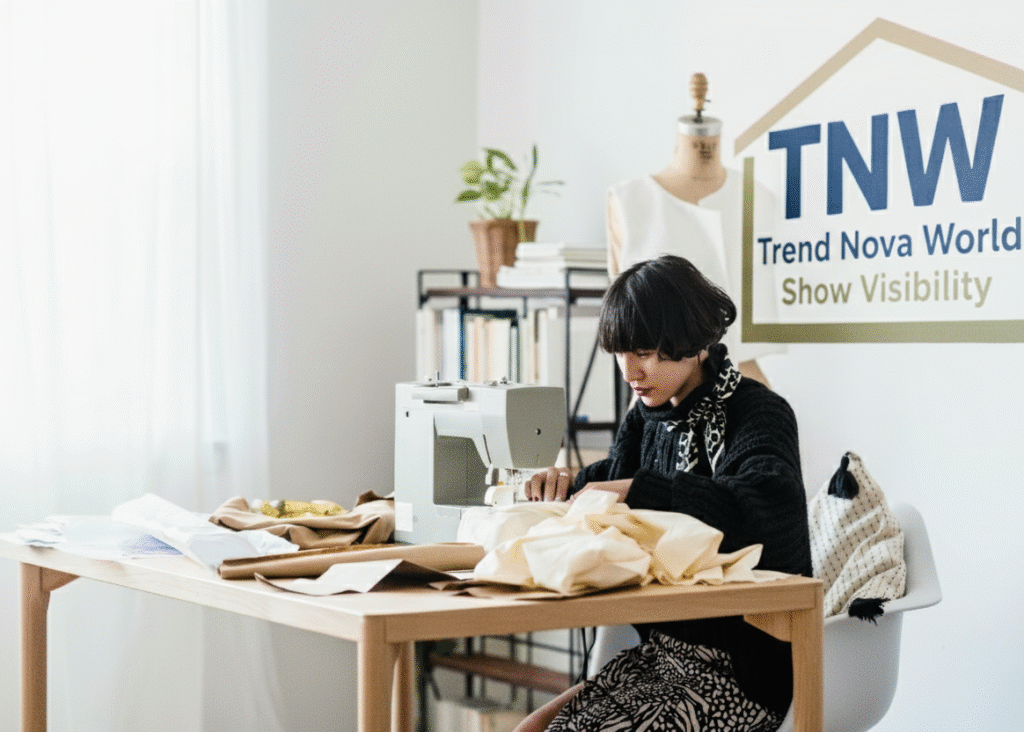
Build Skills in Sewing, Embroidery, and Design
Project Overview
Project Name: Design Workshops for Youth – Build Skills in Sewing, Embroidery, and Design
Division: Fashion Division, Trend Nova World Development Sector
Objective: To empower youth aged 15–25 from underserved communities with practical skills in sewing, embroidery, and design, fostering employability and entrepreneurship in the fashion industry, aligning with UN Sustainable Development Goals (SDGs) 4 (Quality Education), 8 (Decent Work and Economic Growth), and 10 (Reduced Inequalities).
Target Audience: Youth in emerging economies, particularly from marginalized groups such as low-income communities, women, and ethnic minorities, with an interest in fashion and creative industries.
Expected Impact: Train 800 youth annually by 2027, achieving a 50% employment or entrepreneurship rate and a 30% income increase within one year.
Key Partners: Local cooperatives, fashion brands (e.g., H&M, Levi’s), vocational training institutes, and international organizations (e.g., UNESCO, International Labour Organization).
Funding Goal: Mobilize $1.8 million through strategic partnerships and grants by 2027 to launch and scale the program.
Contact: contact@trendnovaworld.com
Project Rationale
The global fashion industry, valued at $1.7 trillion, offers significant opportunities for economic empowerment, yet youth from underserved communities often lack access to the skills and networks needed to participate. The International Labour Organization reports a 13.7% youth unemployment rate, with higher barriers for marginalized groups, particularly women, who represent only 47% of the global labor force compared to 72% for men. The Design Workshops for Youth project, led by Trend Nova’s Fashion Division, addresses these challenges by providing hands-on training in sewing, embroidery, and design, equipping participants with market-relevant skills for employment or entrepreneurship. By fostering creativity and economic inclusion, the program supports SDG targets and promotes sustainable fashion, making it an attractive opportunity for partners and donors committed to youth empowerment and inclusive growth.
This initiative leverages Trend Nova’s expertise in cross-sector collaboration and impact measurement to deliver scalable solutions. It aligns with global priorities, such as UNESCO’s focus on vocational education and the ILO’s decent work agenda, positioning it as a strategic investment for stakeholders aiming to transform lives through creative industries.
Project Components
1. Needs Assessment and Program Customization
- Objective: Identify participant skill levels and tailor workshops to local market demands.
- Activities:
- Conduct assessments using surveys and focus groups to evaluate interests, skills, and barriers.
- Analyze regional fashion markets to identify demand for skills like sustainable design and artisanal embroidery.
- Develop customized curricula with input from fashion industry experts and local cooperatives.
- Outcomes: Create tailored training plans for 250 youth in the 2026 pilot, with 80% alignment to market needs.
- Resources: Assessment tools, market analysts, curriculum developers.
2. Skill-Building Workshops
- Objective: Deliver practical training in sewing, embroidery, and design to enhance employability.
- Activities:
- Offer hybrid workshops (in-person and virtual) covering sewing techniques, embroidery artistry, and fashion design basics.
- Provide training on sustainable practices, such as upcycling and eco-friendly materials, in partnership with brands like H&M.
- Issue industry-recognized certificates upon completion, validated by vocational institutes.
- Outcomes: 70% of participants complete workshops, with 65% reporting improved job readiness.
- Resources: Sewing machines, embroidery kits, e-learning platforms, trainers.
3. Career and Entrepreneurship Support
- Objective: Connect participants to fashion industry opportunities and entrepreneurial pathways.
- Activities:
- Organize showcases and networking events with local and global fashion brands to display participant work.
- Provide career coaching on job applications, portfolio creation, and market pitching.
- Offer microgrants and mentorship for participants launching small fashion businesses.
- Outcomes: Achieve a 50% employment or entrepreneurship rate within six months.
- Resources: Career counselors, microgrant funds, cooperative networks.
4. Impact Measurement and Follow-Up
- Objective: Track program outcomes to ensure transparency and continuous improvement.
- Activities:
- Implement global-standard monitoring and evaluation systems to track key performance indicators (e.g., completion rates, employment outcomes, income growth).
- Conduct follow-up surveys at 6 and 12 months to assess career progression and business success.
- Produce detailed reports and dashboards for partners, highlighting measurable impact.
- Outcomes: 30% average income increase for participants within one year.
- Resources: Monitoring and evaluation software, data analysts, reporting tools.
Implementation Plan
- Phase 1 (Q1–Q2 2026): Launch pilot in three countries (e.g., Bangladesh, Kenya, Guatemala), training 250 youth. Mobilize $350,000 through cooperative partnerships and grants.
- Phase 2 (Q3 2026–Q2 2027): Expand to four additional countries, reaching 800 youth annually. Secure $1.45 million via international grants and corporate contributions.
- Phase 3 (Q3 2027–2030): Scale to 3,000 youth annually, integrating digital design tools and sustainable fashion innovations. Mobilize $3.5 million for long-term sustainability.
- Monitoring & Evaluation: Track key performance indicators quarterly, including completion rates, employment metrics, and diversity outcomes. Share impact reports with partners annually.
Budget Overview
- Total Budget: $1.8 million (2026–2027)
- Needs Assessment & Customization: $300,000 (assessments, market analysis, curriculum design)
- Skill-Building Workshops: $700,000 (equipment, trainers, platforms)
- Career & Entrepreneurship Support: $500,000 (events, coaching, microgrants)
- Impact Measurement & Follow-Up: $200,000 (monitoring and evaluation systems, reporting)
- Administrative Costs: $100,000 (staff, logistics)
- ROI Projection: $4 economic value per $1 invested, based on participant earnings and community economic growth.
Funding and Partnership Strategy
Trend Nova’s Fashion Division is mobilizing resources through strategic cooperative partnerships and grants, leveraging our expertise in creative industry development. Our approach includes:
- Grants: Engage with UNESCO, USAID, and the ILO’s skills development programs, aligning with their focus on vocational training and economic inclusion.
- Cooperative Networks: Partner with global cooperatives like the International Cooperative Alliance and local artisan cooperatives for resource sharing and market access.
- Corporate CSR: Collaborate with fashion brands like Levi’s and H&M, offering co-branding and sustainable supply chain opportunities.
- Philanthropic Foundations: Target foundations like the C&A Foundation, emphasizing sustainable fashion and youth empowerment.
Success Metrics
- Short-Term (6 Months): 70% workshop completion rate, 65% participant satisfaction with skill gains.
- Medium-Term (1 Year): 50% employment or entrepreneurship rate, 30% average income increase.
- Long-Term (3 Years): Train 800 youth annually, generating $5 million in economic impact through earnings and businesses.
Partner Value Proposition
- Impact Alignment: Advances SDGs 4, 8, and 10 through cooperative-driven skill development.
- Transparency: Real-time monitoring and evaluation dashboards and comprehensive impact reports.
- Scalability: Pilot-ready model with potential to train 3,000 youth by 2030.
- Brand Visibility: Co-branding opportunities in showcases, reports, and global forums.
- Leverage: Cooperative partnerships with UN agencies and fashion brands to maximize contributions.
Challenges and Mitigation
- Challenge: Limited access to equipment in underserved areas.
- Solution: Partner with cooperatives for shared resources and subsidize sewing kits.
- Challenge: Market access for participant products.
- Solution: Facilitate connections with global fashion brands and e-commerce platforms.
- Challenge: Coordination across diverse cooperative partners.
- Solution: Use digital platforms for seamless collaboration and resource sharing.
Call to Action
The Design Workshops for Youth project empowers underserved youth through skills in sewing, embroidery, and design, fostering economic inclusion. Trend Nova’s Fashion Division invites cooperative partners and donors to join this mission. Contact us at contact@trendnovaworld.com to explore collaboration opportunities and create a vibrant future for youth in fashion.
Discover the Future. Explore Our World.
Trend Nova World: Uniting Innovation